Loading
Precision Manufacturing
For Life-Critical Medical
Devices
We bring IPC Class 3 assembly, ISO 13485-aligned quality flows, and complete
unit-level traceability to every medical device programme we run.
What medical device manufacturing actually demands
Medical device OEMs face a unique combination of technical, regulatory, and documentation requirements that most EMS companies are
simply not structured to support. These are the challenges that define whether a manufacturer is genuinely medical-capable.
Challenge  01
Regulatory compliance at
every stage
Medical device manufacturing must align with ISO 13485 quality management requirements meaning every process, every change, and every non-conformance must be documented, controlled, and auditable at any point in the product lifecycle.
01
Regulatory compliance at
every stage
Medical device manufacturing must align with ISO 13485 quality management requirements meaning every process, every change, and every non-conformance must be documented, controlled, and auditable at any point in the product lifecycle.
Challenge  02
Complete traceability for
every unit
Regulatory agencies require full traceability from raw component through to the finished device so that in the event of a field issue or recall, every affected unit can be identified precisely and documented completely.
02
Complete traceability for
every unit
Regulatory agencies require full traceability from raw component through to the finished device so that in the event of a field issue or recall, every affected unit can be identified precisely and documented completely.
Challenge  03
Zero tolerance for latent
defects
A latent defect in a medical device can cause patient harm and trigger regulatory action. Medical electronics require the highest workmanship standards, multi-stage inspection, and functional testing that verifies performance under real operating conditions.
03
Zero tolerance for latent
defects
A latent defect in a medical device can cause patient harm and trigger regulatory action. Medical electronics require the highest workmanship standards, multi-stage inspection, and functional testing that verifies performance under real operating conditions.
Challenge  04
NPI timelines under constant
pressure
Medical device launches are already constrained by regulatory timelines. Manufacturing delays at prototype or validation stage compound the pressure — making a fast, reliable NPI process critical to getting products to market on time.
04
NPI timelines under constant
pressure
Medical device launches are already constrained by regulatory timelines. Manufacturing delays at prototype or validation stage compound the pressure — making a fast, reliable NPI process critical to getting products to market on time.
Manufacturing solutions built for medical’s demands
Every service we provide to medical device clients is configured for the compliance, traceability, and precision requirements
of the sector not adapted from a generic production environment.

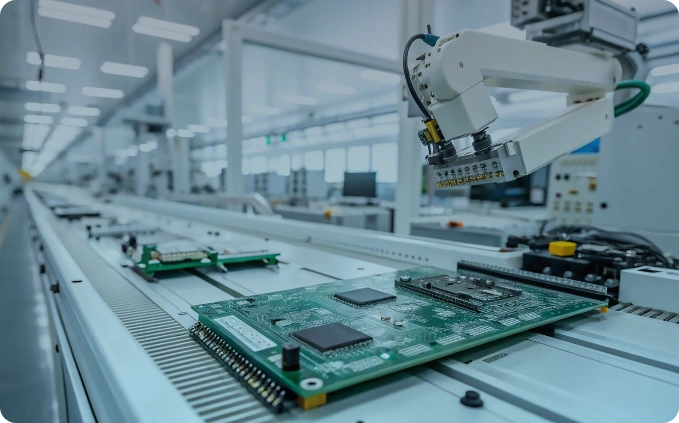
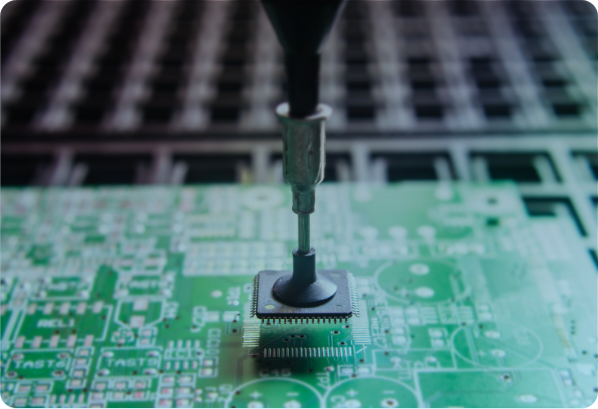
The highest PCB workmanship standard applied as default to all medical device builds. Class 3 ensures the solder joint quality, component placement precision, and inspection rigour that life-critical applications require.

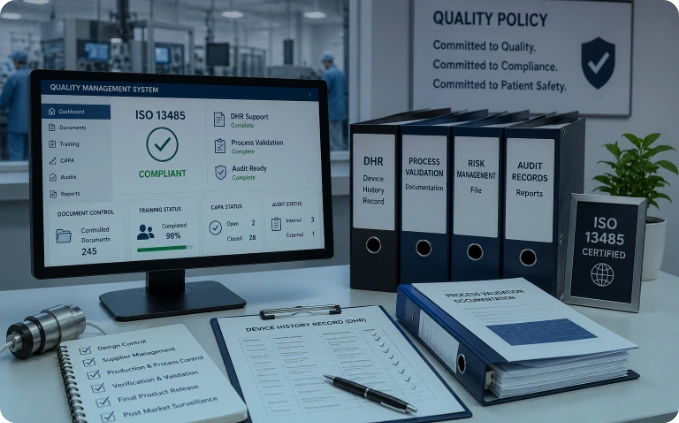
Our quality management process is structured to support ISO 13485 documentation requirements including Device History Record (DHR) support, process validation documentation, and audit-ready records for every programme.

SPI, 100% AOI, X-ray on all BGA joints, ICT, and functional testing with burn-in and environmental stress screening available for products requiring extended reliability validation before market release.

A dedicated NPI resource managing your medical device programme from first prototype to validated pilot run with documentation structured to support your regulatory submission and audit requirements throughout.

Component-level traceability maintained from goods-in through to finished device with serialised records supporting DHR requirements and providing the audit trail regulators expect at inspection.

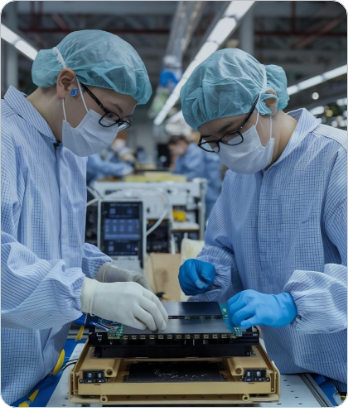
ESD-controlled production environments and cleanroom-compatible assembly processes for sensitive medical electronics protecting device integrity from static damage and contamination throughout the build process.
IPC Class 3 PCB assembly
The highest PCB workmanship standard applied as default to all medical device builds. Class 3 ensures the solder joint quality, component placement precision, and inspection rigour that life-critical applications require.
ISO 13485-aligned quality flows & DHR support
Our quality management process is structured to support ISO 13485 documentation requirements including Device History Record (DHR) support, process validation documentation, and audit-ready records for every programme.
Multi-stage testing & validation
SPI, 100% AOI, X-ray on all BGA joints, ICT, and functional testing with burn-in and environmental stress screening available for products requiring extended reliability validation before market release.
NPI support for regulated products
A dedicated NPI resource managing your medical device programme from first prototype to validated pilot run with documentation structured to support your regulatory submission and audit requirements throughout.
Full unit traceability & serialisation
Component-level traceability maintained from goods-in through to finished device with serialised records supporting DHR requirements and providing the audit trail regulators expect at inspection.
Cleanroom-compatible assembly & ESD protection
ESD-controlled production environments and cleanroom-compatible assembly processes for sensitive medical electronics protecting device integrity from static damage and contamination throughout the build process.
The standards that govern medical device electronics manufacturing
Medical device manufacturing operates within one of the most regulated frameworks in electronics. Every
programme we run for medical clients is aligned to the standards your regulatory pathway requires.
ISO 13485 - Quality
management for medical
devices
ISO 13485 - Quality
management for medical
devices
The international standard for quality management systems in medical device manufacturing governing process controls, documentation, change management, and corrective action. Our quality flows are structured to support ISO 13485 requirements.
IPC-A-610
Class 3
IPC-A-610
Class 3
The highest PCB assembly workmanship standard applied as default to all medical builds. Class 3 requires tighter tolerances, greater inspection rigour, and zero tolerance for workmanship defects that would be acceptable in lower-reliability applications.
DHR - Device history
record support
DHR - Device history
record support
Documentation support for Device History Record requirements maintaining the complete manufacturing record for each finished device as required by FDA 21 CFR Part 820 and EU MDR frameworks.
RoHS & biocompatibility
compliance
RoHS & biocompatibility
compliance
All medical assemblies built to RoHS compliance with material selection reviewed for biocompatibility requirements where the device has patient contact or is implanted adjacent to the body.
ISO 9001 - Quality
management system
ISO 9001 - Quality
management system
Our ISO 9001 certified QMS provides the process discipline, non-conformance management, and continuous improvement framework that underpins every medical programme we run.
ESD protection - ANSI/
ESD S20.20 aligned
ESD protection - ANSI/
ESD S20.20 aligned
ESD-controlled production environments aligned to ANSI/ESD S20.20 requirements protecting sensitive medical electronics from electrostatic damage throughout assembly, test, and storage.
Why medical devices teams choose us
Manufacturing for medical devices requires more than quality claims, it requires demonstrated process
discipline, documentation rigour, and a team that understands the stakes of what they’re building.
Documentation structured
for regulatory audit
Our quality records, traceability documentation, and process validation reports are structured to meet the expectations of ISO 13485 auditors and regulatory inspectors not just our own internal requirements.
IPC Class 3 as standard
not a premium
Class 3 isn’t an upgrade option for medical programmes, it’s the default. Every medical assembly is built, inspected, and tested to the highest workmanship standard from day one.
Dedicated NPI resource
for regulated products
Medical NPI programmes get a dedicated resource who understands the regulatory context managing your programme with the documentation discipline your regulatory submission depends on.
Full unit traceability from
component to device
Every component, every process step, every test result traceable to the finished device serial number. The audit trail your DHR requires is built into our production process, not assembled retrospectively.
Engineering and
manufacturing under one roof
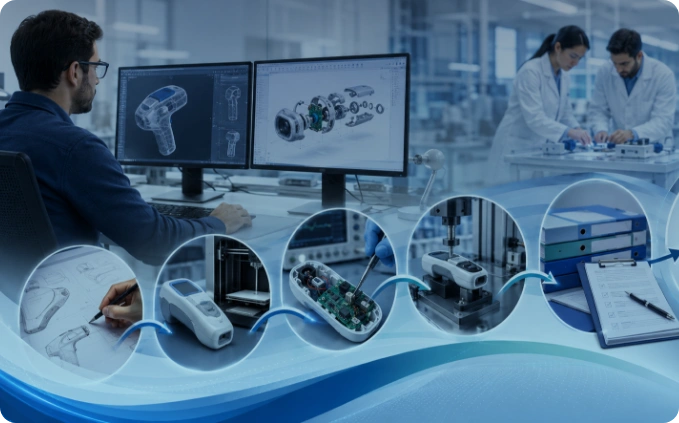
Design validation, DFM, PCB assembly, and testing all under one roof so your medical device programme maintains a single chain of custody from engineering to finished product.
25+ years of cross-
industry manufacturing experience
The process discipline and quality culture that medical devices demand is built into how we operate not something we apply selectively when a medical client arrives.
Why medical devices teams choose us
Manufacturing for medical devices requires more than quality claims, it requires demonstrated process
discipline, documentation rigour, and a team that understands the stakes of what they’re building.
Zero field failures across a 50,000-unit medical PCB
programme with full regulatory audit compliance
Problem
An IIoT startup needed to move from validated prototype to 5,000 deployed industrial gateways requiring PCB assembly, IP67 enclosure integration, firmware loading, LoRa module testing, and direct despatch to customer sites across India.
Solution
We managed the full programme - PCB assembly with RF module integration, IP67 box build, firmware flashing and functional test, and direct despatch to customer sites with parallel workstreams compressing the 12-week timeline.
Outcome
5,000 units deployed within 12 weeks. Zero connectivity failures reported post-deployment. Client scaled programme to 20,000 units for the following quarter.
5,000 units · 12 weeks · zero connectivity failures
Ready to discuss your medical device programme?
Tell us about your product, regulatory pathway, and production requirements and our team will respond within 24 hours.