Top PCB Testing Methods Used by Indian EMS Companies
 30 Jul 2025
  7 min read
 By jinstpvtltd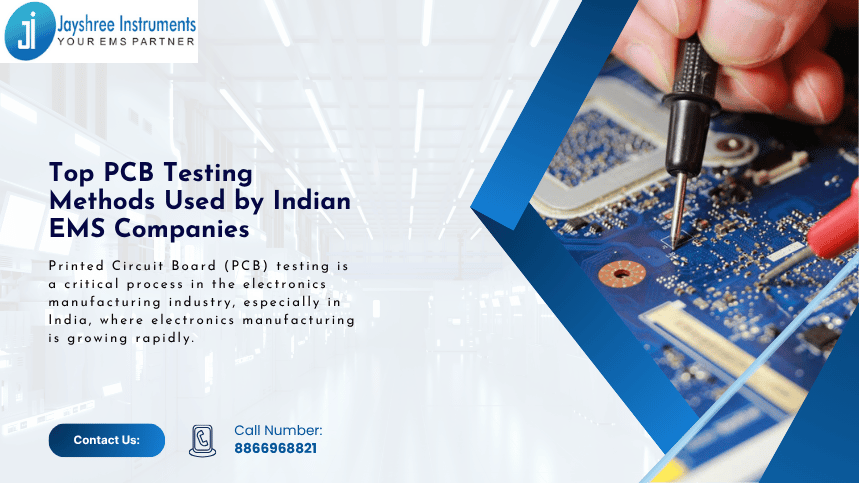
Printed Circuit Board (PCB) testing is a critical process in the electronics manufacturing industry, especially in India, where electronics manufacturing is growing rapidly. With the demand for high-quality electronics increasing, companies must ensure that their PCBs meet the required standards. As an EMS (Electronic Manufacturing Services) provider, PCB testing plays a key role in making sure that products function properly, have durability, and meet customer expectations. In this article, we’ll discuss some of the top PCB testing methods used by Indian EMS companies and how they ensure high-quality manufacturing.
What is PCB Testing?
PCB testing is the process of checking the functionality, integrity, and quality of a PCB during and after the manufacturing process. It ensures that the circuits are correct, components are properly placed, and there are no defects in the board that could lead to failure.
In India, PCB designing companies and PCB assembly services focus on delivering high-quality products, ensuring the PCBs are functional and durable. With the rise of technology and demand for advanced electronics, it’s crucial for Indian EMS companies to implement these testing methods.
Common Types of PCB Testing Methods
1. Visual Inspection Testing (VIT)
Visual inspection testing is one of the simplest methods used for PCB testing. It involves manually or automatically inspecting the PCB for defects like missing components, soldering defects, or physical damage. This is the first step in detecting any visible issues.
- How It Works: In manual VIT, trained professionals visually check each component, ensuring that everything is properly placed and soldered. In automated VIT, cameras and image recognition software are used to identify defects.
- Advantages: It’s a quick and cost-effective method for detecting large-scale defects.
- Limitations: It can miss tiny defects that might affect the PCB’s functionality, like micro-cracks or faulty connections.
In India, visual inspection is a commonly used technique, especially in low-volume PCB assembly services, as it helps speed up the process without high costs.
2. Automated Optical Inspection (AOI)
Automated Optical Inspection (AOI) uses cameras and lights to inspect the PCB for physical defects. It’s one of the most popular testing methods used by PCB assembly services in India.
- How It Works: The PCB is placed on a conveyor belt, and cameras scan the board using high-resolution imaging. The software compares the board’s design to the actual assembly and detects any discrepancies.
- Advantages: AOI is faster than manual visual inspection and can detect very small defects such as missing components or poor soldering quality.
- Limitations: While AOI is great for detecting visual defects, it cannot detect internal issues like electrical faults or improper signal flow.
Indian EMS companies are increasingly investing in AOI to improve efficiency and quality. With advancements in technology, the costs of implementing AOI are dropping, making it accessible to more companies.
3. X-Ray Inspection (AXI)
X-ray inspection is an advanced testing method used for inspecting the internal layers of a PCB. It’s especially useful for detecting hidden defects in multi-layered PCBs.
- How It Works: The PCB is passed through an X-ray machine, which takes images of the inner layers. These images help identify faults like solder bridges, voids, and shorts that are not visible on the surface.
- Advantages: It’s ideal for inspecting high-density boards and complex assemblies.
- Limitations: It’s an expensive testing method and might not be feasible for low-cost or low-volume production.
In India, X-ray inspection is often used in high-end PCB assembly services, especially for industries like automotive, medical devices, and telecom, where the boards are highly complex and require higher reliability.
4. In-Circuit Testing (ICT)
In-Circuit Testing (ICT) checks the functionality of each individual component on a PCB by making electrical contact with each component’s leads. This method ensures that components like resistors, capacitors, and integrated circuits are working correctly.
- How It Works: Probes make contact with test points on the PCB and measure electrical parameters like resistance, voltage, and current. If the test fails, it’s an indication that the component or connection is faulty.
- Advantages: ICT is one of the most effective ways to check the electrical functionality of PCBs. It can identify issues like faulty components or poor soldering.
- Limitations: It can be expensive and time-consuming, especially for complex PCBs that require many test points.
In India, PCB designing companies and EMS companies with a focus on high-reliability products often use ICT, particularly for industries that require highly accurate testing, like aerospace or defense.
5. Functional Testing (FCT)
Functional testing simulates the actual working conditions of the PCB to test if it performs as expected. This method is especially useful for products that require real-world performance verification.
- How It Works: The PCB is powered up, and the full functionality is tested. This includes checking all input and output signals and ensuring the board performs the required tasks, like communication with other devices or processing signals.
- Advantages: FCT ensures that the PCB works under real-world conditions.
- Limitations: Functional testing requires a fully assembled PCB, which can be costly and time-consuming.
FCT is widely used in Indian EMS companies that deal with consumer electronics, automotive, and telecom products. It’s a critical part of the testing process for products that will be used by customers in everyday life.
6. Flying Probe Testing
Flying Probe Testing is a non-contact method of testing PCBs, especially in low-volume production runs. It uses probes that move across the PCB to make electrical contact with specific test points.
- How It Works: The flying probe is mounted on a system that moves in X, Y, and Z directions, touching the PCB at designated points to test its functionality.
- Advantages: Flying probe testing is highly flexible and doesn’t require a customized fixture, making it suitable for prototype or small batch productions.
- Limitations: It is slower compared to ICT and AOI and may not be suitable for high-volume manufacturing.
Indian EMS companies that focus on quick-turn PCB assembly often rely on flying probe testing for prototypes or low-volume orders, as it’s an affordable and fast way to check PCB quality.
The Role of PCB Testing in Quality Control
PCB testing is a vital part of the quality control process. Without thorough testing, it’s impossible to ensure that the PCB will function as expected. For Indian EMS companies, PCB testing helps in:
- Ensuring product reliability: Regular testing minimizes the risk of defects and ensures that products meet industry standards.
- Reducing costs: Early identification of faults can reduce the need for expensive rework or product recalls.
- Meeting regulatory standards: Certain industries, like medical and automotive, require strict adherence to safety and quality standards, making PCB testing mandatory.
Challenges in PCB Testing for Indian EMS Companies
While PCB testing is essential, there are some challenges that Indian EMS companies face in this process:
- Cost of equipment: High-end testing methods like X-ray inspection and in-circuit testing can be expensive, especially for small to medium-sized companies.
- Skilled labor shortage: Properly interpreting PCB test results requires highly skilled technicians, which can be a bottleneck.
- Complexity of designs: As PCBs get more complex, the testing process becomes more challenging and time-consuming.
Conclusion
In conclusion, PCB testing is an indispensable part of the PCB assembly services process, especially for EMS companies in India. With the rise of complex designs and the need for reliable, high-performance products, methods like Automated Optical Inspection (AOI), In-Circuit Testing (ICT), and Flying Probe Testing are increasingly being adopted.
For businesses looking to offer quality PCB assemblies, investing in advanced testing methods is key to ensuring that the final product meets customer expectations. Indian PCB designing companies and EMS providers must stay updated with the latest testing technologies to maintain their competitive edge in the global market.
At Jinst.in, we ensure that our PCB assembly and testing services meet the highest industry standards. Our team is dedicated to providing top-notch PCB assembly services and utilizing the best PCB testing methods, ensuring the highest quality products for our clients.